BASNET Knowledge Mobilisation Programme

Our Knowledge Mobilistion Programme is aimed at creating a body of knowledge on issues of exploitation, modern slavery and human trafficking based on the direct lived experiences of BME community and lived experience leaders. It is a direct off-shoot of our three year funded Research Residential Programme which started in 2024. BASNET community leaders and lived experienced experts who took part in the residential programme are obliged, as part of their research capacity efforts, to produce a small piece of research which highlights a core issues in their work and lived experience. We are delighted that volunteer academics and researchers from the British Academy mentored our members and supported them to design their projects and conduct their research. The results: powerful research projects with key outputs, including research reports, policy papers and guidance toolkits, launched at our Knowledge Mobilisation Conferences in June 2025 and April 2026.
We are grateful to St Mary’s University Bakhita Centre for hosting the 2026 Conference and to our funders - AB Charitable Trust and Paul Hamlyn Foundation for their generous support for this important programme.
-
Build capacity of BASNET members who are Black and Ethnic led organisations to “tell their own stories” by engaging in community based research projects and preparing and disseminating the reports
Build collaboration with academia by pairing members with researchers and academics as “mentors” to support their research journey
Empower member to gain the requisite research skills through conducting their own research projects alone or by working in partnership with each other
Build a repertoire of research project reports accessible to those outside BASNET
Build potential for follow up work and expansion into bigger research projects - alone or in partnership with academic bodies.
-
Become leaders in Black and Ethnic focused research within the MS/HT sector
Encourage our members to become generators of ideas for research from a community perspective
Provide/facilitate research training, capacity building and mentorship for our members so that they can initiate their own in house research for the sector
Build BASNET to become a knowledge hub for BME research within the MS/HT sector
New: Read Our 2026 Knowledge Mobilisation Research Reports
-
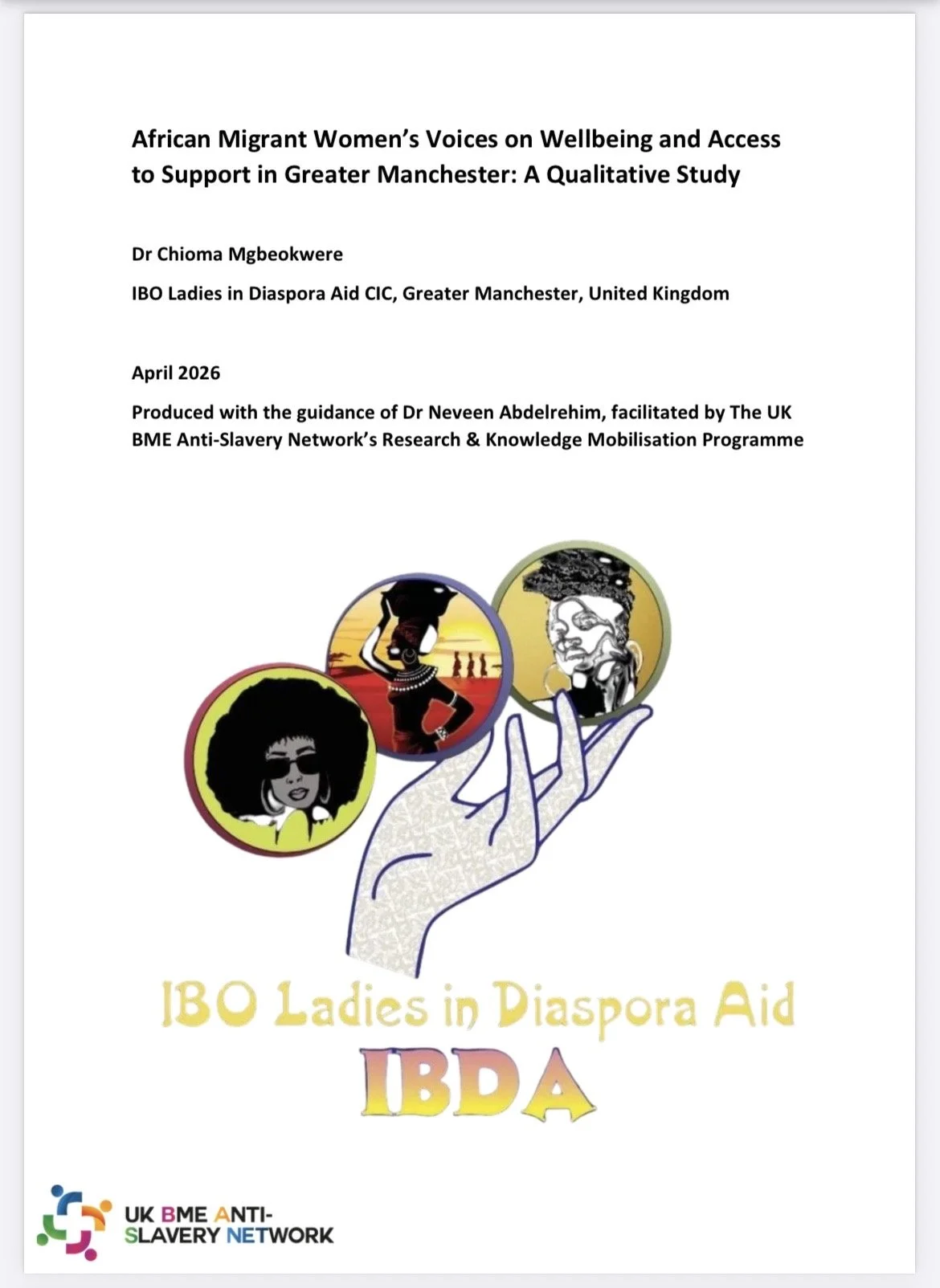
BASNET member and CEO of Ibo Ladies in Diaspora Dr Chioma Mgbeokwere’ s research report explores systemic barriers and enabling factors shaping the journeys of Black women in UK diaspora communities. It unpacks how racialised and gendered experiences intersect to affect participation, progression, and visibility. Insights inform inclusive policy, advocacy, and community-based interventions that drive systemic change and promote wellness. The work aligns with social justice and gender equity
Contact: Dr Chioma Mgbeokwere@ infoibda@mail.com
-
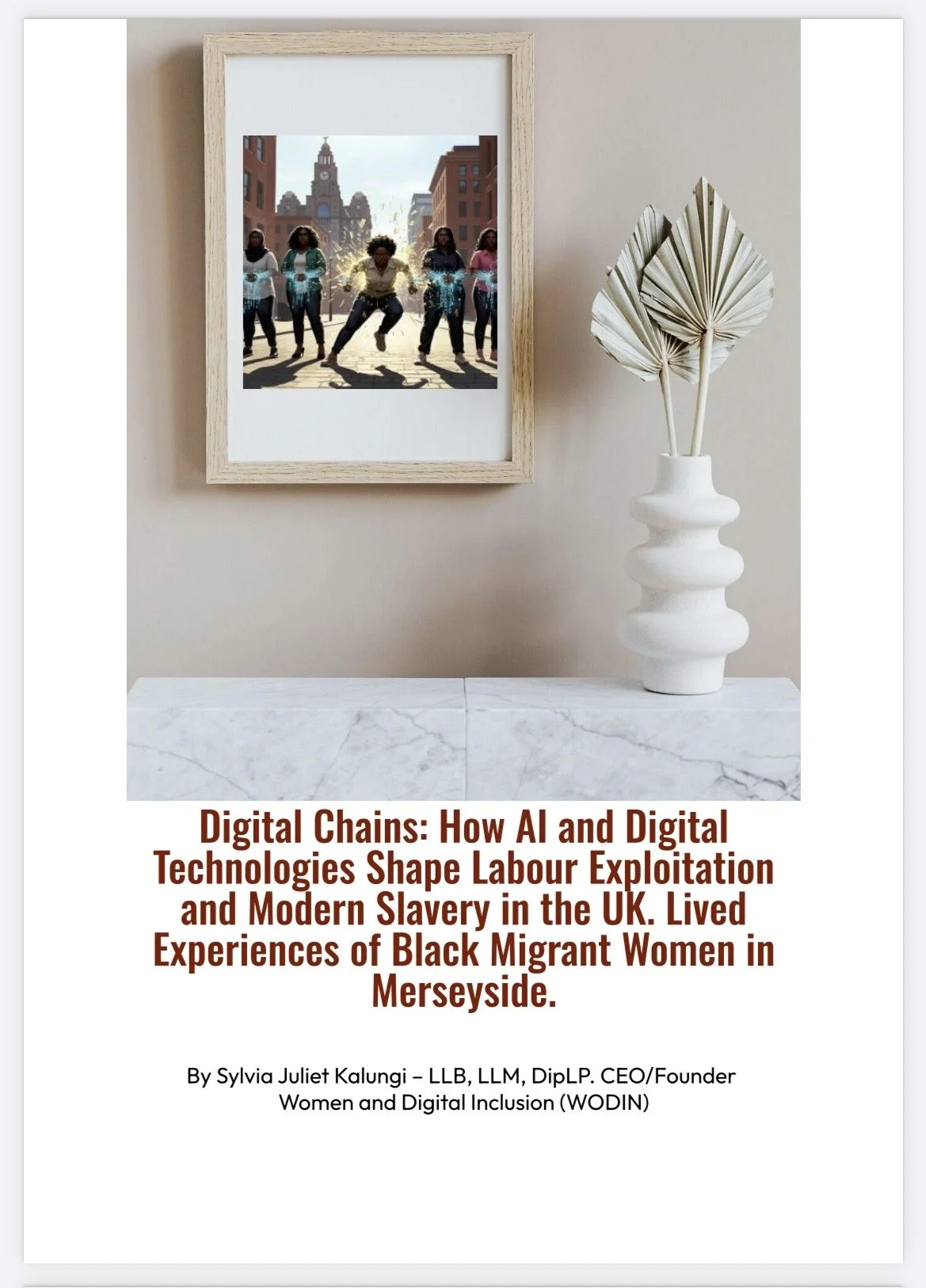
Authored by BASNET member and CEO of Women and Digital Inclusion (WODIN) Sylvia Kalungi, this research examines how artificial intelligence (AI) technologies impact Black immigrant women and minoritised communities in Merseyside, particularly in perpetuating modern slavery. It provides valuable insights to support a more inclusive approach to AI development and implementation. The project also aims to deliver a blow to perpetrators of modern slavery by centring affected communities.
Contact: Sylvia kalungi@ wodinliverpool@gmail.com
-
Lived Experience Expert Kehinde Ojo’s resaerch rerort and briefing addresses critical gaps in the National Referral Mechanism (NRM) by highlighting the underrepresentation and systemic neglect of Black men within anti-trafficking frameworks. Despite the recognised need for inclusive services, Black men remain invisible in data, service design, and policy discourse. This invisibility is not a statistical oversight—it is a structural issue perpetuating inequality and exclusion.
Contact: Kehinde Ojo@
-
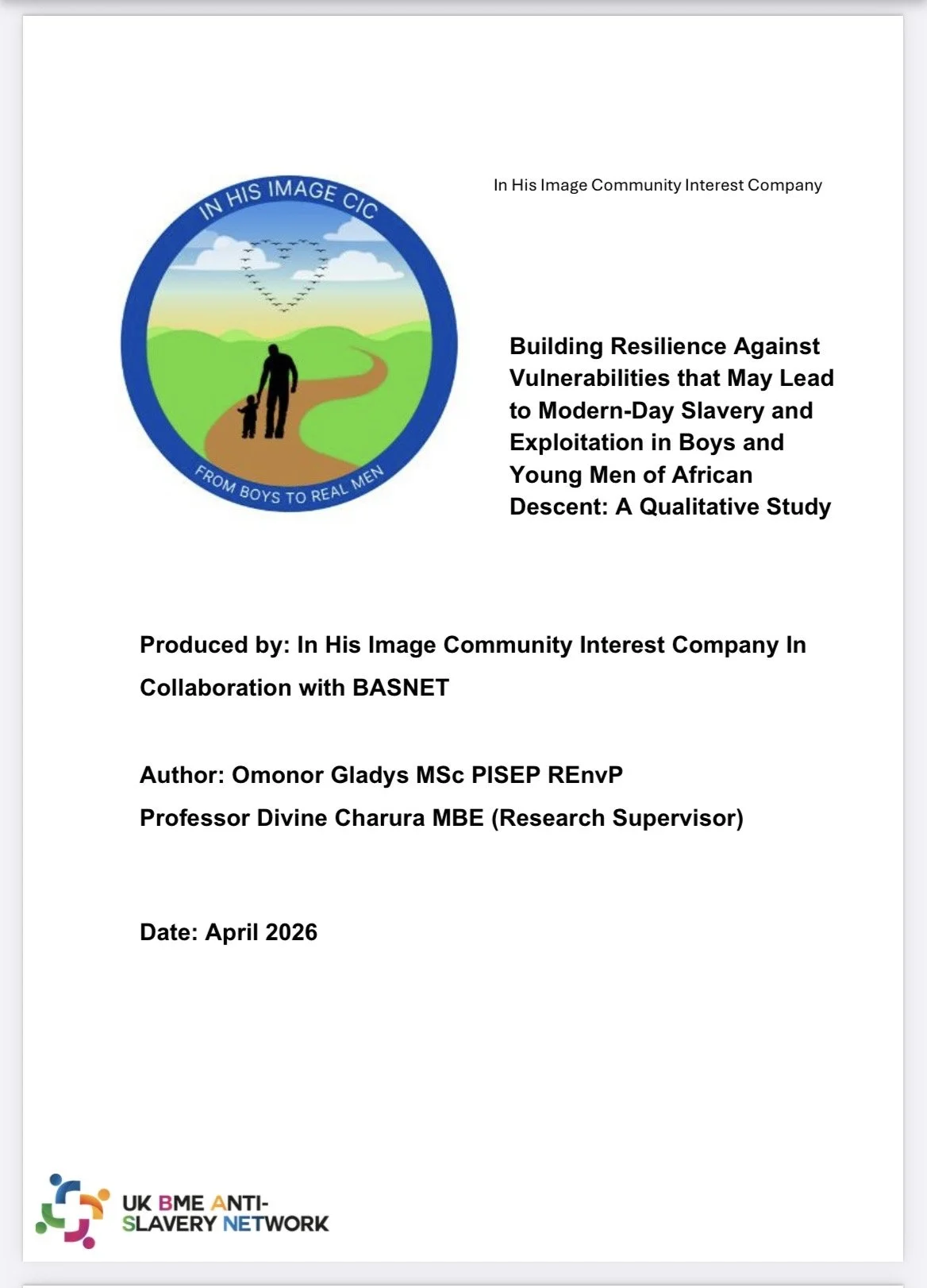
BASNET member and CEO of In His Image CIC’s Omonor Gladys’s research focuses on vulnerabilities and resilience to modern slavery and exploitation in boys and young men, including adultification bias, social pressures, upbringing, and safe spaces. Using an Ubuntu methodology, the study highlights how culturally grounded support, emotional regulation, and positive identity development serve as protective factors. The findings inform community-based interventions that address systemic neglect and promote wellbeing.
Contact:
Omonor Gladys@ info@inhisimagecic.org.uk
-
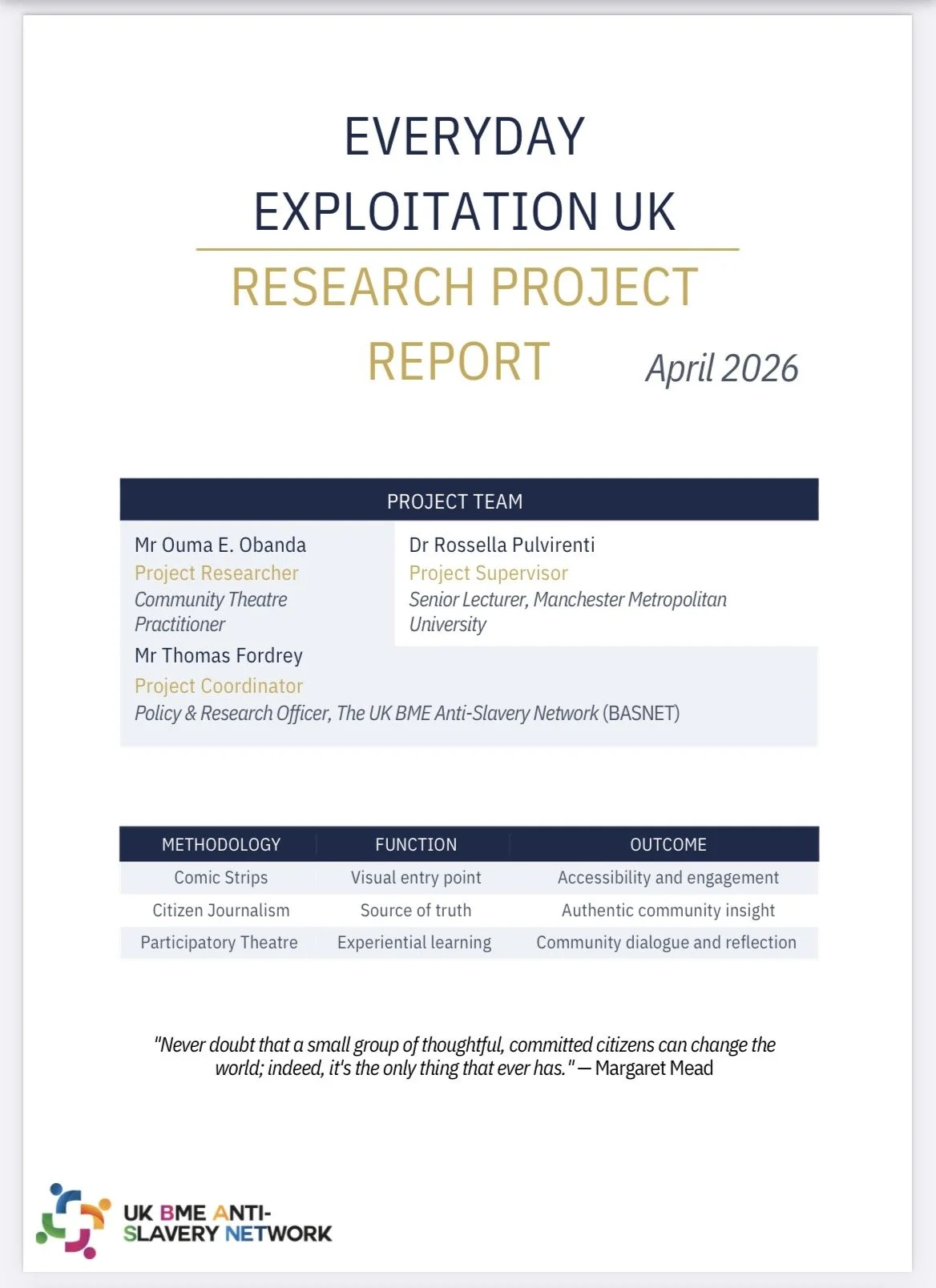
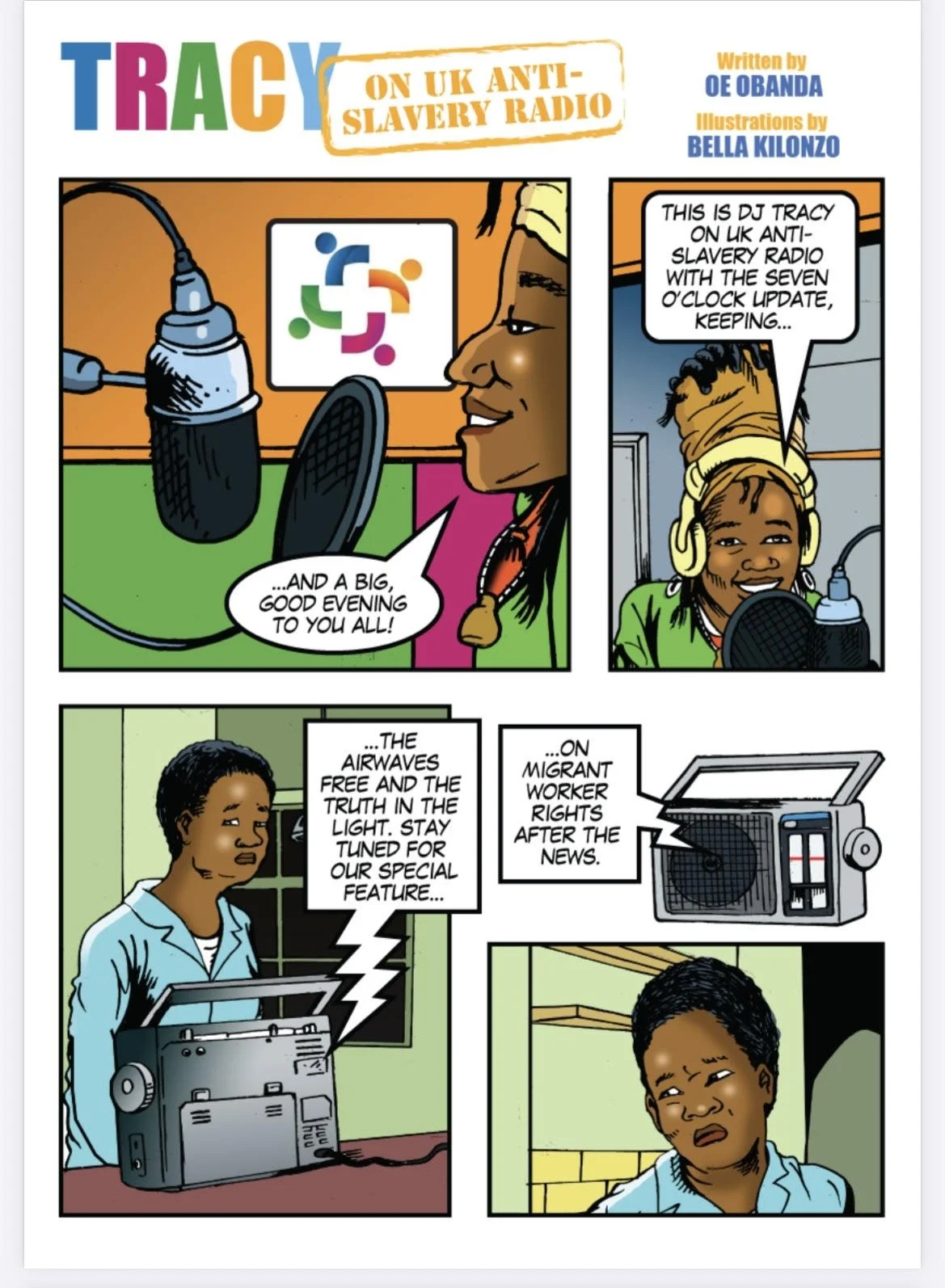
BASNET member Ouma Obanda’s research report and comic strip panel adress systemic issues of modern slavery and human trafficking through storytelling and participatory dialogue. Working directly with affected communities in Southeast London, it uses advocacy and narrative approaches to illuminate hidden experiences and structural inequalities. Findings contribute to more inclusive policies, advocacy strategies, and social justice by centring the voices of those most impacted.
Contact: Ouma Obanda@ nairobijuzi@yahoo.com
-
BASNET member Ouma Obanda’s research report and comic strip panel adress systemic issues of modern slavery and human trafficking through storytelling and participatory dialogue. Working directly with affected communities in Southeast London, it uses advocacy and narrative approaches to illuminate hidden experiences and structural inequalities. Findings contribute to more inclusive policies, advocacy strategies, and social justice by centring the voices of those most impacted.
Contact: Ouma Obanda@ nairobijuzi@yahoo.com
Read Our 2025 Knowledge Mobilisation Research Reports

-
BASNET member and CEO of Music Relief Foundation Magdalene Usikaro’s policy paper spotlights how music can transform the lives of marginalised youth, especially Black and ethnic minority children affected by poverty, violence, and exclusion. Through case studies from her work at the Music Relief Foundation, the paper explores how music fosters healing, self-expression, and leadership. The policy paper calls for expanded funding, integration with mental health support, and protection of grassroots arts initiatives.
Contact: info@music-relief.org

-
Authored by BASNET members Ehinor Otaigbe-Amedu (Wonderfully Made Woman) and Idowu Khadijat Morafa (Across Ummah), this research highlights the cultural, economic, and structural barriers preventing African women from reporting domestic violence in Greater Manchester. With 71% of surveyed women identifying as survivors, the report reveals the impact of emotional, financial, and sexual abuse, and calls for trauma-informed, culturally tailored services, alongside community-based education and prevention.
Contacts: ehinor@wonderfullymadewoman.org

-
Lived Experience Expert Syed Ahmed’s research examines critical failings in the UK’s Recovery Needs Assessment (RNA) for survivors of modern slavery. The report documents the views of survivors and frontline workers reporting confusion, trauma, and a lack of tailored or trauma-informed support following NRM identification. The report calls for personalised case management, clear communication, interpreter access, and fast-tracked mental health care to ensure recovery with dignity.
Contact: syed.rayhan.ahmed.1985@gmail.com

-
This practical guide, co-authored by BASNET Members Mackenzie Lunga (Mesheba CIC), Sipiwe Takura (Oasis Training), and Ade Adetunji (Noble Arise CIC), addresses the exploitation of migrant workers—especially Black and Brown individuals—within the UK social care sector. It outlines the impact of revoked sponsorships, misinformation, and visa-linked job insecurity. The guide offers solutions including legal advice, sponsor-switching guidance, and community-led safeguarding, while advocating for systemic reform to protect migrant dignity.
Contact:
maclunga@meshebahcic.co.uk (Mackenzie)
stakura2@gmail.com (Sipiwe)

-
This report by BASNET Member and CEO of House of Rainbow, Rev. Jide Macaulay explores the lived experiences of Black and Brown LGBTQ+ migrants in the UK subjected to human trafficking, labour exploitation, and sexual violence. Research participants reported being misgendered, traumatised, and failed by state and faith-based support systems. The report calls for intersectional legal protections, LGBTQ+ competency training for professionals, multilingual outreach, and investment in community-led care networks.
Contact: jide@houseofrainbow.org

-
Led by BASNET Members Ruth Ogunji (BLOSSOM), Elohor Onoge (Flourishing Vines CIC), and Lived Experience Expert Judith Nkoji, this study explores how authoritarian parenting and cultural silence within African households can increase girls’ vulnerability to grooming. Focus groups with girls aged 11–19 revealed how adultification, emotional neglect, and gendered expectations limit safety and disclosure. The report recommends youth-led education, culturally competent parenting strategies, and community dialogue.
Contact: flourishingvinescic@yahoo.com